
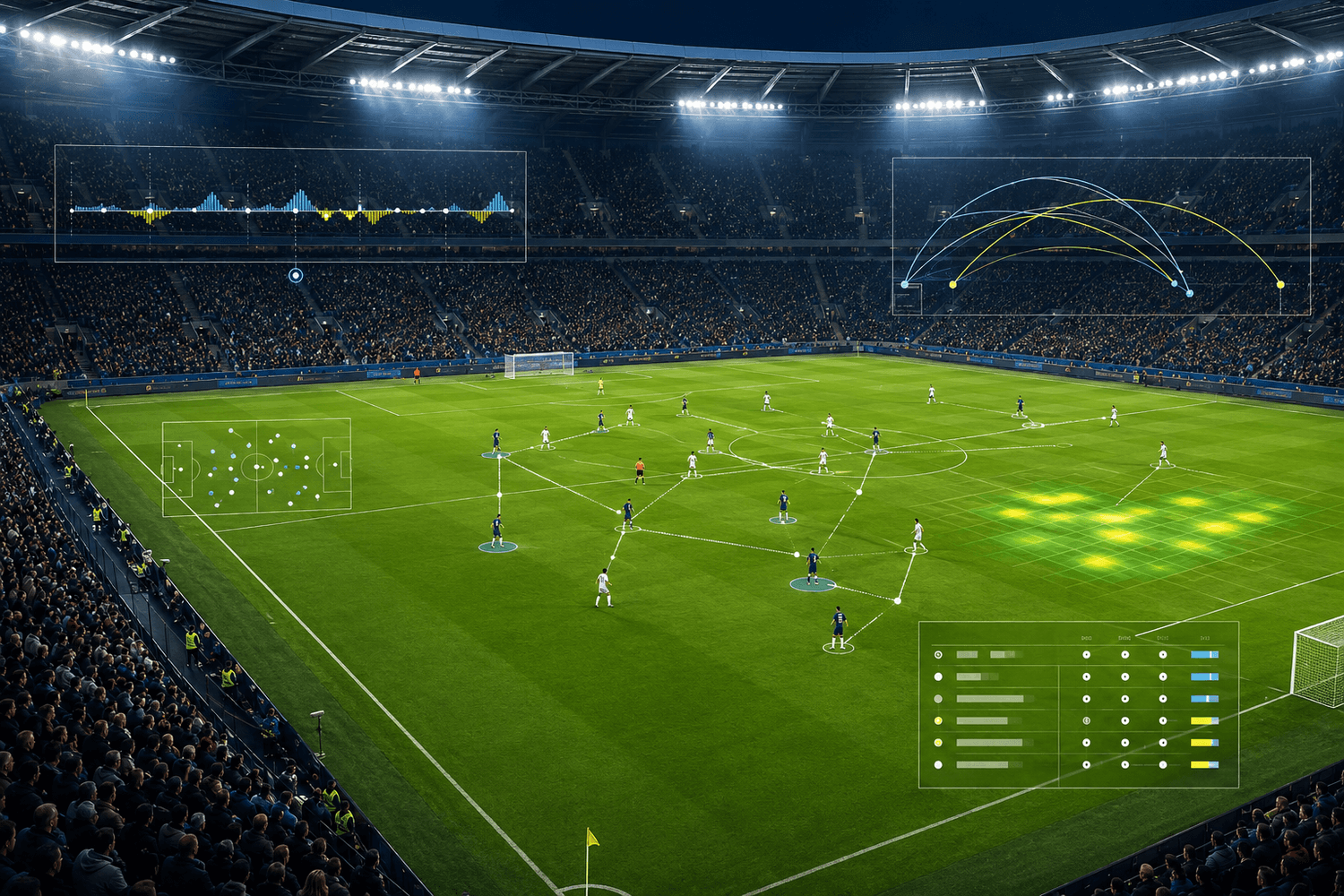
The modern World Cup is no longer experienced only through the 90 minutes on the pitch.
For many fans, it now arrives as a stream of score updates, live tables, tactical graphics, player statistics, automated officiating checks, broadcast overlays and second-screen information that changes from minute to minute.
The result is a tournament that can feel less like a sequence of matches and more like a constantly updating system. A goal can alter a group table instantly. A yellow card can change suspension scenarios. A tight offside call can trigger a technical review and a 3D graphic. A substitution can be followed by data on distance covered, pressing intensity or attacking threat.
Football Is Changing. Understand Why.
A clear look at the decisions reshaping the modern game, from tournaments and governance to technology and the business pressures behind football’s future.
Explore the Book
Football is becoming a live information system
FIFA has built much of this around what it calls its Football Data Ecosystem, a network designed to collect, process and distribute match information ranging from schedules and team sheets to live events, statistics and 3D recreations of play. The system is intended to give tournament officials, broadcasters, digital platforms and other users consistent data from the same underlying source.
The most visible example for many viewers is officiating technology. Semi-automated offside systems use stadium cameras to track the ball and multiple points on each player’s body, with FIFA saying the technology can track up to 29 data points per player 50 times per second. The system is designed to support video match officials and generate visual explanations for close calls, rather than replace the referee’s final authority.
Mobile Data for Match Travel
Flexible mobile data can help fans keep up with live tables, match alerts and tournament news while travelling for football.
 Check Mobile Data Options
Understand Football’s Future
A practical guide to the forces reshaping the modern game, including data, technology and tournament planning.
Explore the BookSecure Matchday Browsing
A VPN can be useful when checking football apps, travel bookings and live updates over hotel, airport or café Wi-Fi.
 Review VPN Option
Graphics are now part of the match narrative
That changes the viewing experience. Fans are not only watching whether a striker times a run correctly; they are also waiting for the system to confirm where shoulders, knees, feet and the ball were at a specific moment. Broadcasters then turn those decisions into graphics, animations and explanations that become part of the match narrative.
The same shift applies beyond refereeing. Live standings now update during matches, helping viewers understand qualification scenarios as they change. Match centres display shots, expected goals, possession, passing sequences, player locations and team momentum. Data providers report that broadcasters and digital publishers increasingly use live feeds to create line-up graphics, shot maps, in-play insights and post-match analysis at speed.
Fans get more clarity and more noise
For fans, this can make the tournament easier to follow and harder to switch off. A viewer no longer needs to watch every minute of every match to understand the wider picture. Apps, graphics and live tables can show which team is advancing, which result matters elsewhere, or which player is shaping the game statistically.
It also changes how arguments about football happen. Debates that once centred mainly on eyesight, memory and interpretation now often include frame-by-frame images, tracking data and statistical comparisons. That can bring clarity, but it can also make the experience feel more technical, especially when decisions depend on systems viewers cannot fully see.
The next stage is personalization
What comes next is likely to be more personalization. Fans may increasingly follow tournaments through customized feeds: one view for their national team, another for fantasy-style player data, another for betting markets, tactics or highlights.
The football will remain the central event, but the surrounding experience will keep becoming more measurable, more continuous and more tailored to the individual viewer.

Daniel Mercer
Daniel Mercer covers football through the lens of match context, player welfare, tournament planning and the decisions that shape the modern game. His briefings focus on what matters beyond the scoreline, helping readers understand the practical and human side of football’s biggest stories.
Disclosure: This page may contain sponsored or affiliate links. Football Briefing Daily may earn a commission if you click or buy through qualifying links, at no extra cost to you.