
The next World Cup is not simply a larger version of the tournament fans already know.
The expansion to 48 teams changes the structure of the competition, the qualification picture, the number of matches and the way supporters will have to follow the event from the opening group games to the final.
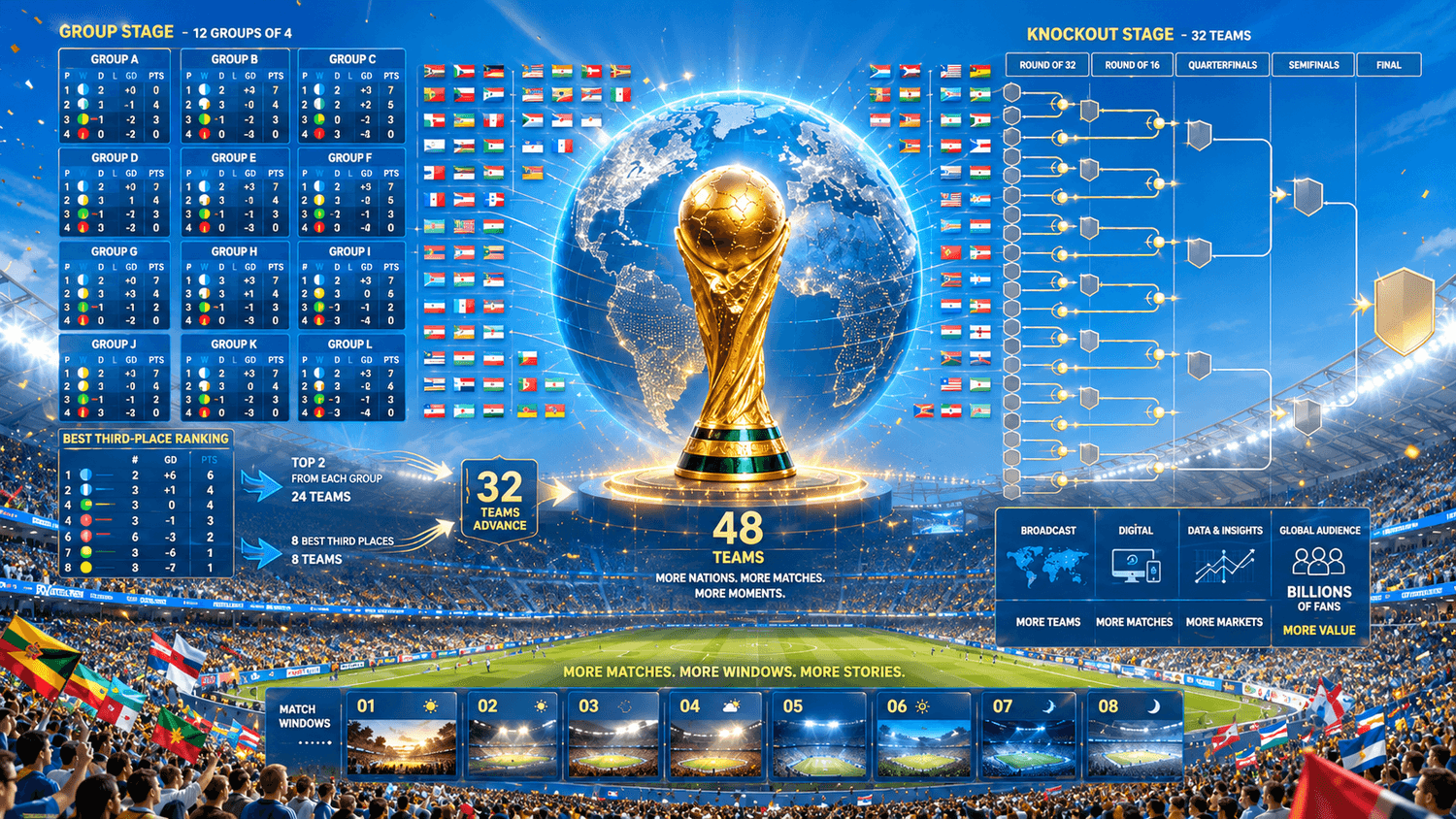
FIFA’s expanded format features 48 national teams, up from 32, and 104 matches across the tournament. The teams are divided into 12 groups of four. Each team still plays three group-stage matches, but the path out of the group is different: the top two teams in each group advance automatically, along with the eight best third-place teams. That creates a 32-team knockout round before the familiar later stages of the competition.
Football Is Changing. Understand Why.
A clear look at the decisions reshaping the modern game, from tournament expansion and player welfare to the business logic changing football.
Explore the Book
The group stage becomes harder to read
For fans, the biggest practical change is that the group stage will be harder to read at a glance. In the old 32-team format, eight groups produced a clean equation: the top two advanced and the bottom two went home. In the new system, finishing third may still be enough, depending on results elsewhere.
That means supporters will need to follow not only their own team’s group but also the wider third-place table, goal difference, goals scored and other tiebreakers.
Streaming Privacy Check
Add a privacy layer when browsing, streaming or travelling across multiple football apps, accounts and devices.
 See VPN Options
Understand Football’s Future
A practical guide to the forces reshaping the modern game, including tournament format, commercial pressure and global audience growth.
Explore the BookMore matches means more consequences
The expanded structure also means more matches with consequences. With 12 groups and 32 knockout places available, more teams can remain alive deeper into the group stage. Smaller and less frequent World Cup nations have a wider route into the tournament and, potentially, into the knockout rounds.
For established football countries, the extra knockout round adds another match that must be navigated before the quarter-finals.
Why the business model changes
The change matters beyond the number of teams because it alters how the World Cup functions as a global event. More countries in the field means more domestic audiences with a direct stake in the tournament. More fixtures mean more broadcast windows, more venue use and more days when multiple results can change the knockout picture.
Organizers, broadcasters and fans will all be dealing with a competition that is longer, denser and more dependent on live standings than previous editions.
Qualification feels different too
It also changes how qualification is understood. The expanded field creates additional tournament places across confederations, giving more national teams a realistic path to the finals. That may make the World Cup feel more global, but it also makes the final tournament less compact and less familiar for fans used to the previous rhythm.
What happens next will depend on how the format plays out once matches begin. The key areas to watch will be the third-place race, whether late group games remain competitive, how easily fans adapt to the new knockout bracket and whether the expanded schedule changes the way teams manage squads.
The basic World Cup story is still about countries trying to win seven or eight decisive games. The experience of following it, however, is now much more complicated.

Daniel Mercer
Daniel Mercer covers football through the lens of match context, player welfare, tournament planning and the decisions that shape the modern game. His briefings focus on what matters beyond the scoreline, helping readers understand the practical and human side of football’s biggest stories.
Disclosure: This page may contain sponsored or affiliate links. Football Briefing Daily may earn a commission if you click or buy through qualifying links, at no extra cost to you.