
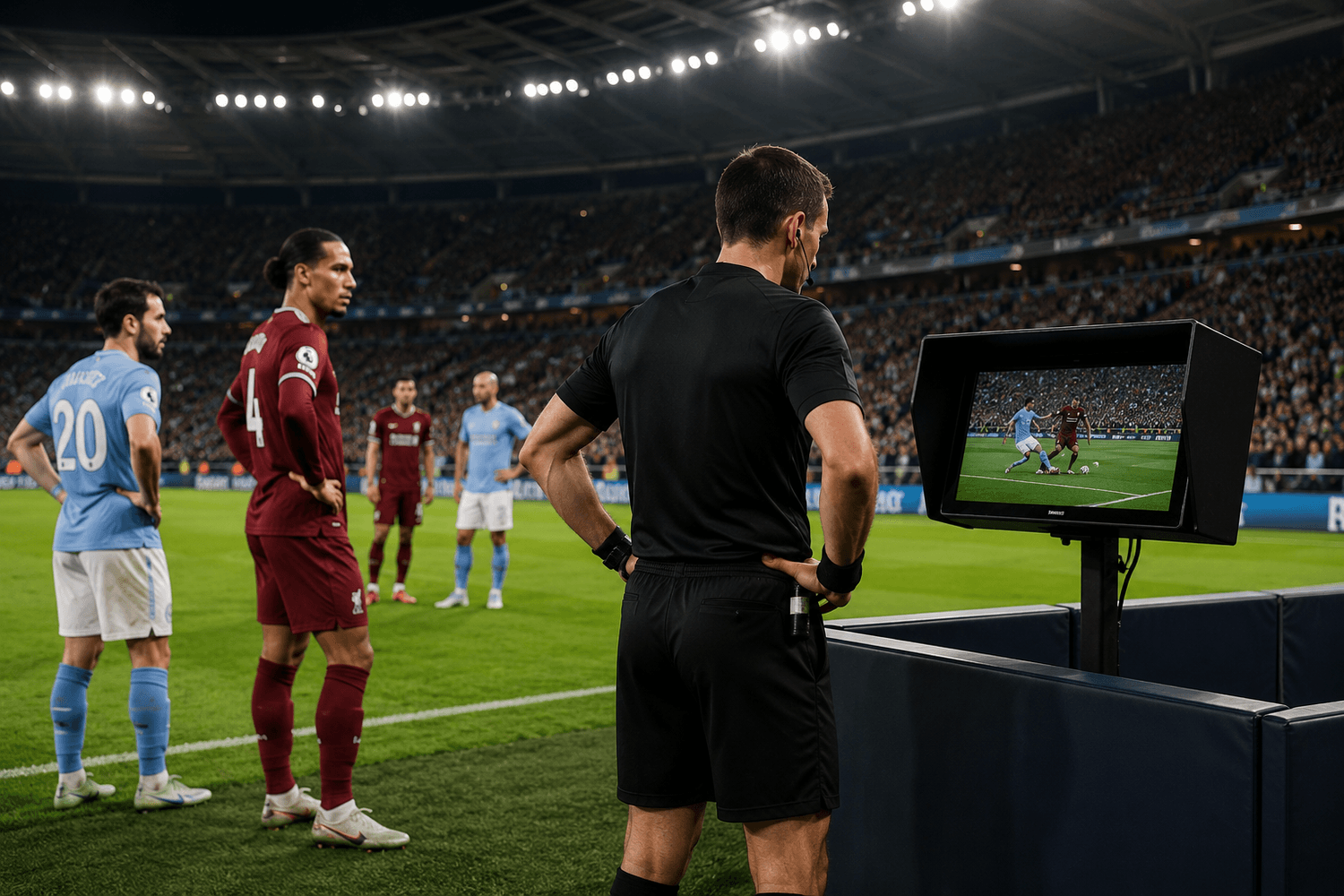
A disputed penalty in Switzerland’s 1-1 draw with Qatar at the 2026 World Cup has again put football’s officiating technology under scrutiny.
Switzerland were awarded a first-half penalty after Remo Freuler was challenged by goalkeeper Mahmud Abunada, but the move was followed by debate over whether Freuler had been offside before the foul. FIFA later said a technical issue prevented the semi-automated offside graphic from being shown to broadcasters, while officials maintained that the review process had checked the incident and found no offside offence.
The episode did not prove that VAR failed to operate. It showed something more familiar: even when technology is available, trust can still depend on what supporters, players and coaches are able to see and understand in real time.
Football Is Changing. Understand Why.
A clear look at the decisions reshaping the modern game, from tournament planning and player welfare to the systems changing football on and off the pitch.
Explore the Book
VAR did not remove interpretation
VAR was introduced to correct clear and obvious errors and serious missed incidents in match-changing moments, including goals, penalties, direct red cards and mistaken identity. Under the protocol set by football’s law-making body, the referee’s original decision is not supposed to be changed unless the video evidence clearly shows an error. The final decision remains with the referee, either after advice from the VAR or following an on-field review.
That structure explains why controversy has not disappeared. Some decisions, such as whether a player is beyond the last defender, can be assisted by calibrated lines or semi-automated systems. Others still require interpretation: whether contact was enough for a foul, whether a handball was deliberate, whether a challenge endangered an opponent, or whether a player interfered with play.
VPN for Football Viewers
Add a privacy layer when browsing, streaming or travelling across multiple football apps, accounts and devices.
 See VPN Options
Understand Football’s Future
A practical guide to the forces reshaping the modern game, including match technology, tournaments and trust.
Explore the BookMore technology can still mean less clarity
Semi-automated offside technology is designed to make some of those calls faster and more consistent. FIFA describes it as a support tool for video officials, not as a replacement for the referee. It can help identify offside positions and speed up communication, but it still sits inside a human-led process that includes timing, camera angles, law interpretation and the referee’s judgment.
For fans, the practical effect is that major matches can feel more precise and less transparent at the same time. A goal, penalty or red card may now be delayed while unseen checks take place. When the evidence is clearly shown, technology can increase confidence. When graphics are missing, angles are unclear or explanations are brief, the argument shifts from “what did the referee see?” to “what did the system decide, and why?”
The real question is trust
That is the warning sign for football. The sport is moving toward more cameras, more data and more automated support, but precision does not automatically produce acceptance. Supporters are not only judging the outcome. They are judging the process.
Governing bodies are likely to face continued pressure to explain decisions more clearly, improve stadium and broadcast communication, and define where technology should stop. The central question is no longer whether football will use more technology. It is whether the game can make that technology understandable enough for its biggest moments to feel credible.

Daniel Mercer
Daniel Mercer covers football through the lens of match context, player welfare, tournament planning and the decisions that shape the modern game. His briefings focus on what matters beyond the scoreline, helping readers understand the practical and human side of football’s biggest stories.
Disclosure: This page may contain sponsored or affiliate links. Football Briefing Daily may earn a commission if you click or buy through qualifying links, at no extra cost to you.