
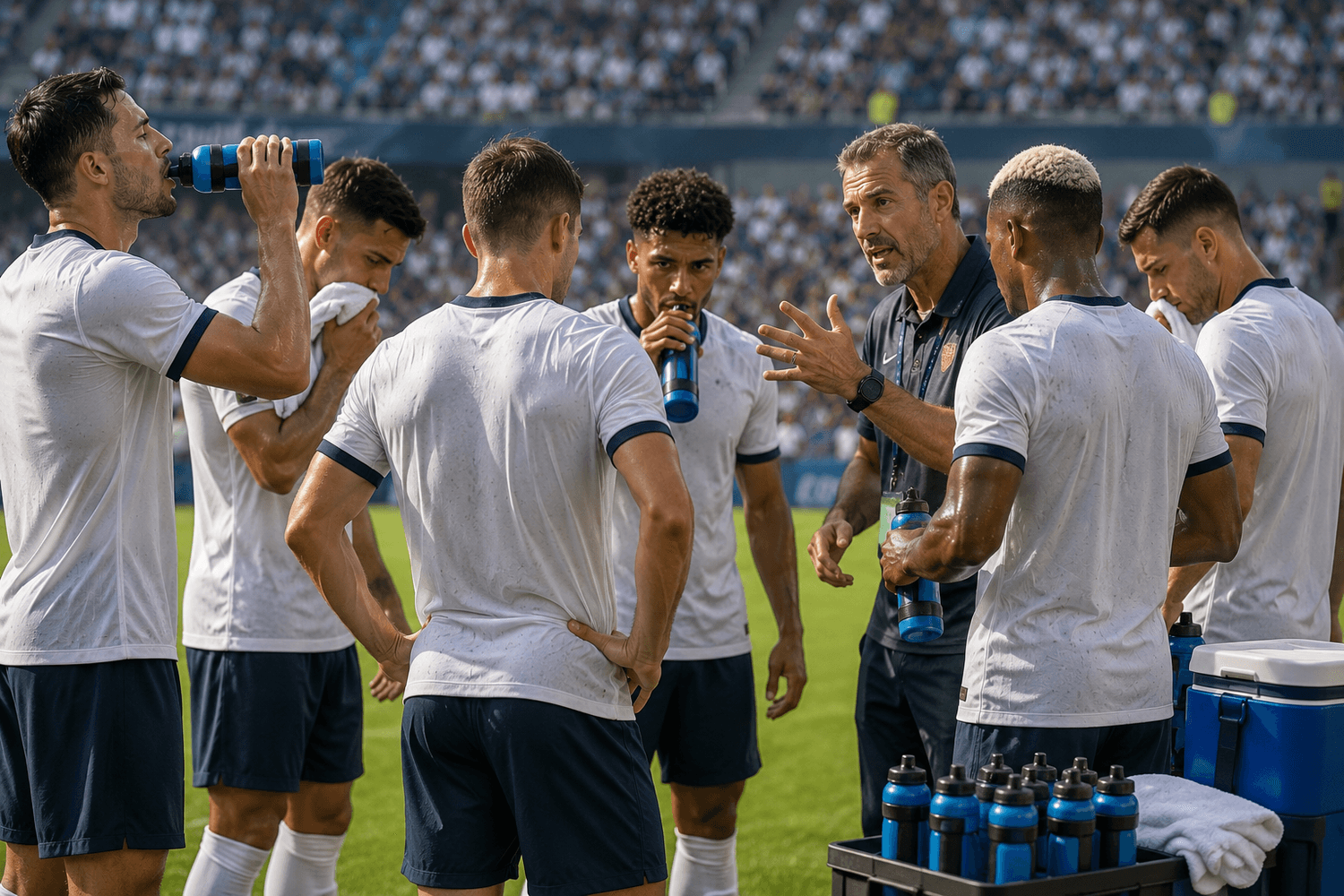
World Cup viewers are seeing matches stop more visibly because scheduled hydration breaks have become part of the tournament conversation. The pauses are designed to give players time to drink, cool down and receive quick instructions during demanding conditions.
According to the tournament explanation used in the source article, the policy is being treated as a player-welfare measure. The 2026 World Cup is being played across the United States, Canada and Mexico, with venues facing different temperatures, humidity levels and stadium environments. Organizers have to manage those conditions while also protecting match rhythm and broadcast flow.
The result is a small pause with a much bigger meaning. Hydration breaks may last only a few minutes, but they sit at the centre of several modern football pressures: player safety, heat planning, tactical coaching, commercial scheduling and the growing complexity of major tournaments.
Football Is Changing. Understand Why.
A practical guide to the forces reshaping modern football, from tournaments and player welfare to the decisions changing the game on and off the pitch.
Explore the BookWhy hydration breaks matter
The breaks are not entirely new to football. Cooling or drinks pauses have appeared before in high-heat conditions, including at previous tournaments. What is different now is the scale and visibility. When a pause appears in a major international match, it is not just a medical intervention. It becomes part of how viewers understand the game.
For fans, the immediate effect is simple. Matches may feel less continuous than expected, with each half effectively divided into shorter segments. That can interrupt momentum, especially when one team is building pressure or another is defending through a difficult spell.
For coaches, the pause can become a tactical window. A hydration break gives staff a brief chance to reorganise players, change instructions or calm a match that is becoming stretched. That does not make the break a bad idea, but it does mean the welfare measure can affect the competitive rhythm.
Recovery Tools for Active Days
Mobility and massage tools for training, travel and long days on your feet.
 View Mobility Tools
Protein Bars for Busy Match Days
A simple snack option for travel days, long fixtures and busy football weekends.
 Shop Protein Bars

Understand Football’s Future
A clear look at the decisions reshaping the modern game, including tournament planning and player welfare.
Explore the BookThe wider player-welfare question
That is why the issue has quickly moved beyond player hydration alone. Some coaches welcome the pauses as useful moments to speak to players without waiting until half-time. Some players may question whether mandatory breaks are needed in conditions that do not feel extreme. Supporters may simply wonder why the flow of a World Cup match is being interrupted at all.
The debate reflects a wider shift in elite football. Modern tournaments are increasingly managed through medical data, performance monitoring, climate planning and broadcast scheduling. Player welfare remains the official reason for the rule, but the policy also shows how controlled the modern match environment has become.
What to watch during the next fixture window
There are practical questions for officials. If conditions are dangerous, some medical experts and performance staff may argue that a short pause cannot solve the full heat-risk problem. If conditions are mild, critics are likely to keep asking why the same interruption is needed in every match.
The next flashpoint may come during a tight knockout game, especially if a hydration break appears to help one coach reset momentum. That does not mean the policy is wrong. It does mean supporters should expect the breaks to become part of the tactical conversation as well as the welfare conversation.
For now, the pauses are part of the World Cup’s operating model: a small interruption that reveals how much football is changing around the match itself.

Emma Calder
Emma Calder writes clear football explainers on fixtures, fan planning, player welfare and the changing structure of major tournaments. Her work is designed for readers who want calm, useful context without hype, jargon or endless transfer noise.
Disclosure: This page may contain sponsored or affiliate links. Football Briefing Daily may earn a commission if you click or buy through qualifying links, at no extra cost to you.